Home in education has been around as long as Adam and Eve. Adam and Eve had no teachers or school to send their children to, so they simply had to do it themselves. It has been the case during much of history that they were simply no schools to send children to, leaving parents with no alternative but to homeschool.
Stacy Mantle discusses seven specific types of learning styles: linguistic, logical, spatial, musical, bodily, interpersonal, and intrapersonal.
The Michigan Court of Appeals has rejected a claim that home schooled students have a right to participate in extracurricular interscholastic athletic programs in the school districts where they reside. This decision by the Court of Appeals, Reid, et al. v Kenowa Hills Public Schools, et al., affirms that the Michigan High School Athletic Association (MHSAA) and school districts can require students to be enrolled in and passing at least twenty credit hours (per week) in order to be eligible to participate in athletics.
Afrocentric Homeschoolers Association Email Group is a discussion group for pro-Black African and/or African Diasporan, Black homeschoolers, unschoolers, deschoolers, and home-based educators everywhere. It is also open to non-homeschoolers and non-Blacks who are trying to teach their children about Blacks. It was founded as a resource for Black homeschoolers, Blacks in Canada, the U.S., Caribbean, and elsewhere, including the African Canadian, African American, African Caribbean, Black European, African, and Black Canadian.
 Their Future Is Shining Bright: A Guide to Homeschooling in High School -- and E...
 Homeschool High School: A Handbook for Christian Education
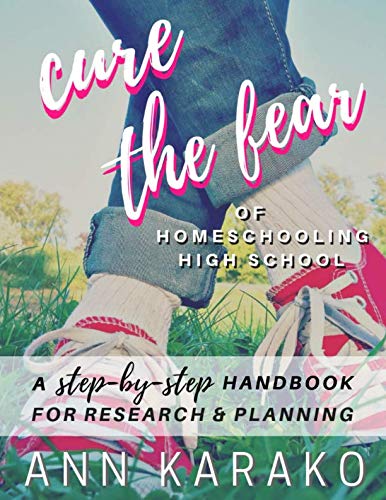
 Cure the Fear of Homeschooling High School: A Step-by-Step Handbook for Research...
 For the Record: How to Give Grades and Organize Documentation while Homeschoolin...




 College-Prep Homeschooling: Your Complete Guide to Homeschooling Through High Sc...
 Prepare for College!: A Complete Guide to the College Admission Process for Home...
 Becoming Homeschoolers: Give Your Kids a Great Education, a Strong Family, and a...
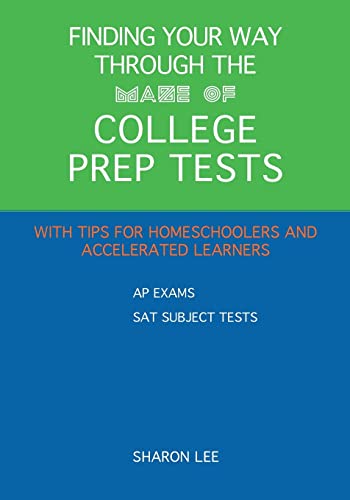
 Finding Your Way through the Maze of College Prep Tests: A Guide to APs and SAT ...
 Preparation for College Mathematics 2e Textbook
![GED Study Guide 2025–2026 [3 IN 1]: All Subjects | The Complete Prep Book with Lessons, Hundreds of Practice Questions, and 3 Full-Length Practice Tests to Pass on Your First Try](https://m.media-amazon.com/images/I/51MTEz5XDTL._SL500_.jpg "GED Study Guide 2025–2026 [3 IN 1]: All Subjects | The Complete Prep Book with Lessons, Hundreds of Practice Questions, and 3 Full-Length Practice Tests to Pass on Your First Try")